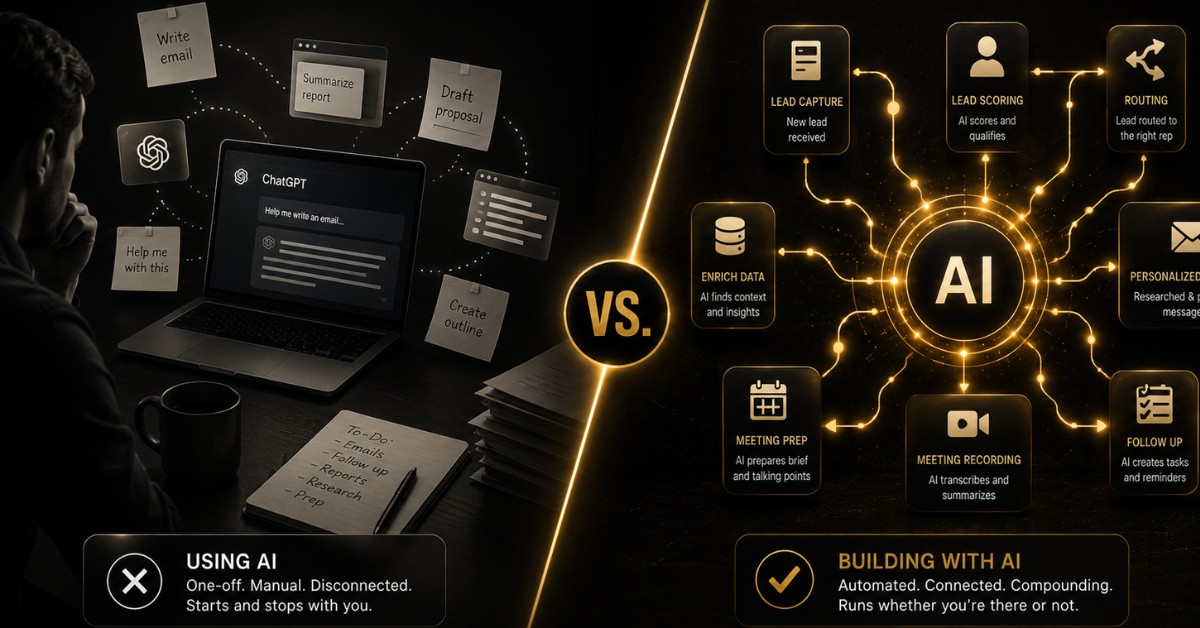
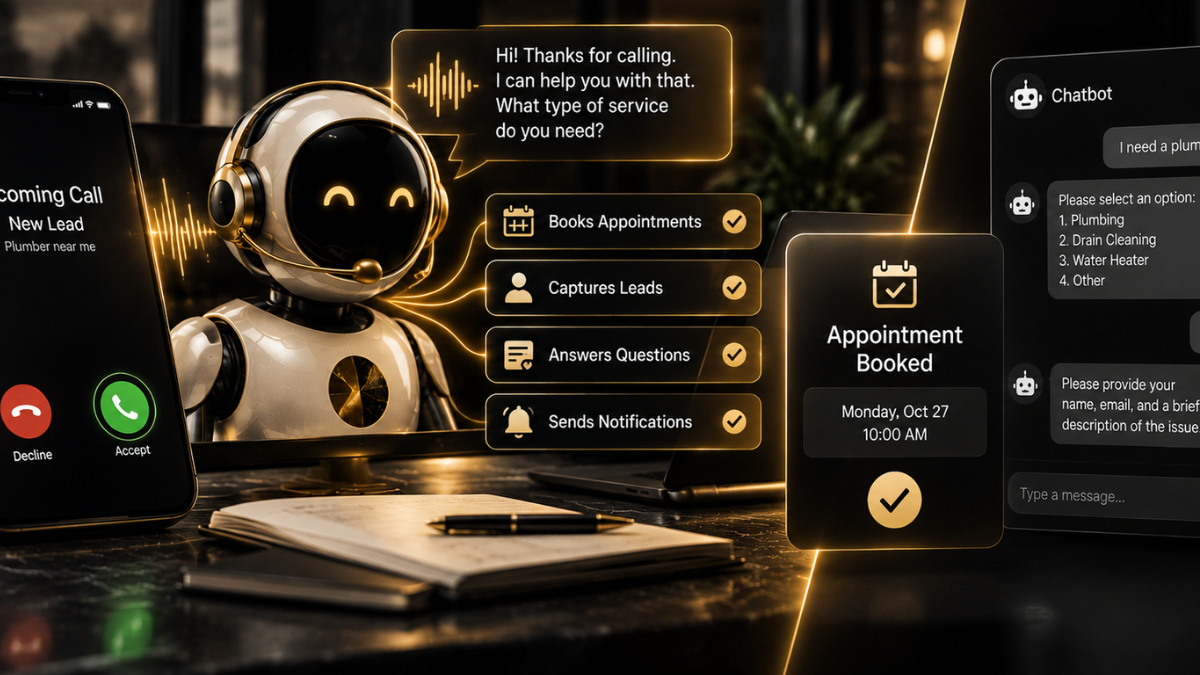
When people hear "AI for business," most of them picture a chat window in the corner of a website. A little bubble that says "How can I help you today?" and then can't actually help with much.
So when I tell business owners that AI Touchstone builds custom voice agents, I often get: "Oh, like a chatbot?" It's a fair guess. It's also the wrong one, and the difference matters more than most people realize.
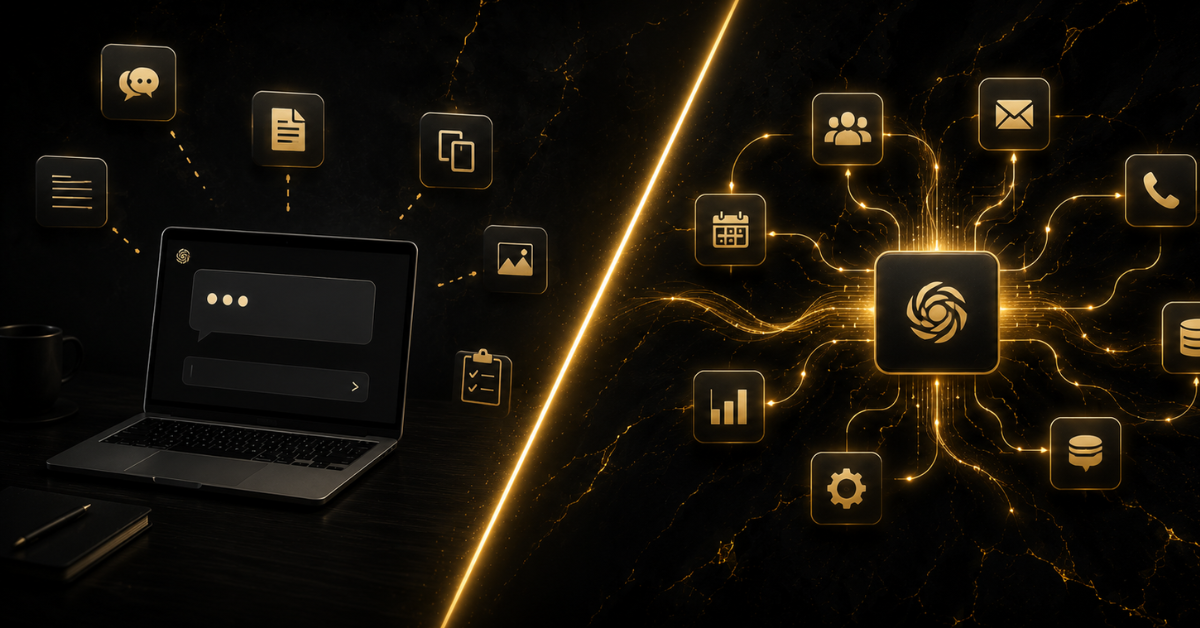
A chatbot waits. A voice agent answers.
A chatbot sits on your website and waits for someone to type. That's useful for some things, but it isn't where most of your customers go when they're ready to buy. When someone's AC dies in July, or they need a lawyer this week, or they want to book a consultation, they pick up the phone.
A voice agent answers that call. It picks up on the first ring, day or night, and has an actual conversation. It understands what the caller is asking, even when they ramble or interrupt. It can answer questions about your services, qualify the lead, book the appointment on your real calendar, and send your team a summary of the call. When something is urgent, it can flag it and escalate it to a person.
It isn't a phone tree either. Nobody is pressing 1 for sales or shouting "representative" into the phone. It's a conversation. Yet, the best voice agents, like the ones we build, do know when to pass the call through to a human for certain situations.
The phone is where the money leaks out
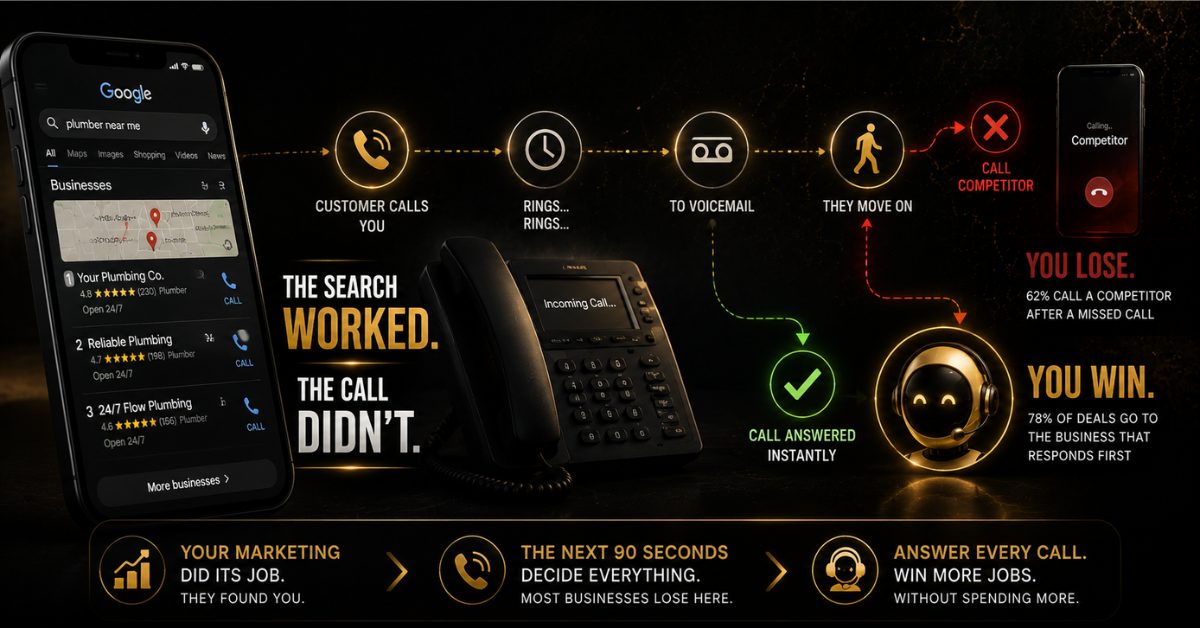
Here's why this matters. Most small businesses miss more calls than they think, and most of those callers don't come back. Quo analyzed 16.7 million missed calls from small business customers and found that 69% never got a callback within 48 hours. Their data also showed a clear pattern: if a callback doesn't happen the same day, it usually doesn't happen at all.
On the customer side, a 2025 CallRail survey of 1,000 US consumers found that only about 42% leave a voicemail when a business doesn't pick up. And 82% said they'll call a competitor instead.
Think about what that means for a busy owner. You're on a job site, with a client, or closed for the night. The phone rings. Most of those callers hang up without a message and dial the next business on the list. You never even know they called. A voice agent closes that gap. Every call gets answered, every lead gets captured, and your team gets the details to follow up.
The quality isn't what it used to be. And that's a good thing.
If your idea of an AI voice comes from robotic phone systems a few years ago, it's time to update it. Today's voice models sound natural. They pause, they handle interruptions, and they respond in about the time a person would. The pace of improvement is fast. In just the last week, Google released Gemini 3.8 Live with Live Avatar, an AI presenter that holds real-time, lip-synced conversations in 97 languages. Alibaba cut prices on its Qwen-Audio 3.1 models, including roughly 85% off its real-time voice model.
You don't need a talking avatar to answer your phones. But these releases show where things are headed: voice AI is getting better and cheaper at the same time. That's usually when a technology stops being an experiment and starts being a normal part of doing business.
Businesses using it are happy with it
This isn't just hype from vendors. G2 analyzed 1,419 verified buyer reviews of AI voice assistants between May 2025 and April 2026. 93.1% rated their experience 4 stars or higher. Only 2% expressed negative sentiment. Among the vendors G2 surveyed, 76% said their customers were seeing significant or transformational operational ROI.
The most interesting finding was about who's buying. The largest group of reviewers came from companies with fewer than 10 employees. In other words, this isn't a big-enterprise trend trickling down. Small businesses are leading, because they feel the pain of a missed call the most.
What this looks like in practice
At AI Touchstone, we don't hand you a generic script and wish you luck. Every voice agent we build is custom. It knows your services, your pricing rules, your hours, and your scheduling logic, including buffers between appointments and how long each type of job takes. It sounds like your business, not like a template.
After the calls, you also get insight you never had before. Call transcripts show you what customers are asking about, where leads are dropping off, and which opportunities are slipping through. The businesses that do well with this usually start small. They put the agent on after-hours calls, or overflow calls when the front desk is busy. Once they see the results, they expand.
The bottom line
Chatbots had their moment. But your customers aren't typing into a box when they're ready to buy. They're calling you. The question is whether someone answers.
If you want to see how many calls your business is missing, and what a voice agent would sound like for your business, book a conversation with AI Touchstone to speak with one of our founders.